
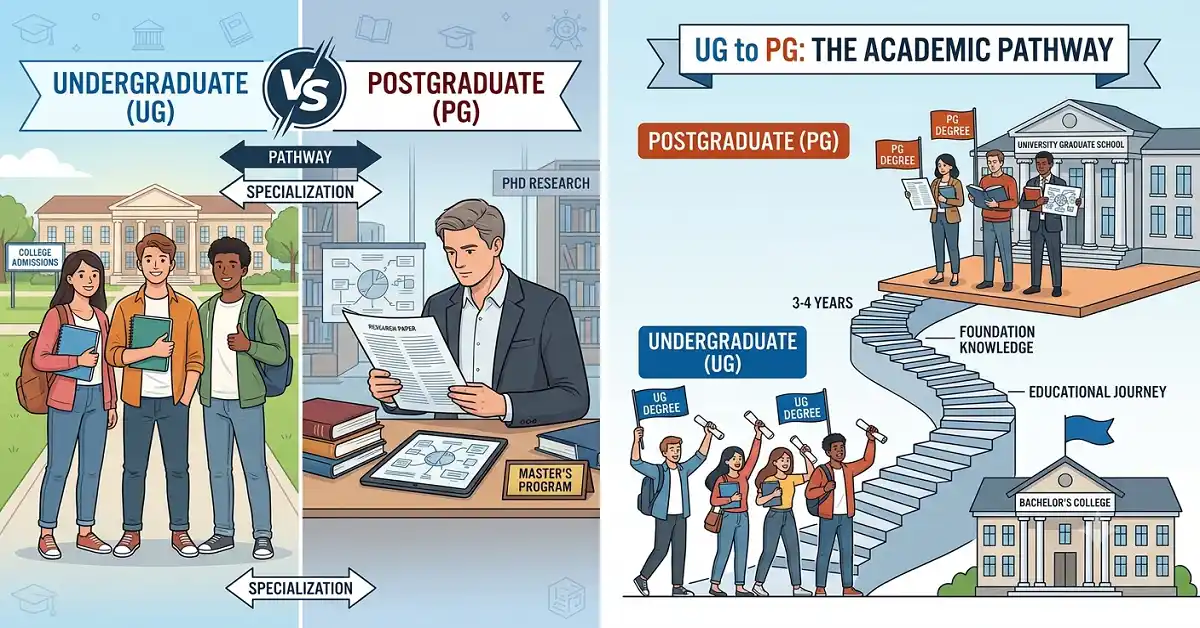
Difference Between UG and PG: शिक्षा के अन्दर UG और PG दो बहुत महत्वपूर्ण डिग्रीयो के नाम हैं। जब 12वीं कक्षा के बाद में कोई स्टूडेंट आगे की पढाई करना चाहते है जिसमे वो कॉलेज को तो Undergraduate (UG) स्तर पर होता है। वहीं, Graduation पूरी करने के बाद की जाने वाली उच्च शिक्षा को Postgraduate (PG) कहा जाता है।
आसान भाषा में बोलो तो UG Graduation की पढ़ाई है, जबकि PG Graduation के बाद की Advanced या Higher Education होती है।
उदाहरण के लिए, अगर कोई विद्यार्थी 12वीं के बाद BA, BSc, BCom, BCA या BBA करता है, तो यह UG Course में आती है। इसके बाद वही विद्यार्थी MA, MSc, MCom, MCA या MBA करता है, तो यह PG Course में माना जाता है।
इस लेख में हम आपको UG और PG में अंतर, UG का अर्थ, PG का अर्थ, Eligibility, Course Duration, Fees, Admission Process और Career Options को विस्तार से आपको बताने वाले है।
UG क्या है? (What is UG?)
UG का पूरा नाम Undergraduate होता है। और इसमें हिंदी में इसे स्नातक स्तर की शिक्षा कहा जाता है।
12वीं कक्षा पास करने के बाद विद्यार्थी जिस Graduation Level की पढ़ाई में प्रवेश लेते हैं, उसे Undergraduate Course कहा जाता है।
UG Courses के उदाहरण
- BA – Bachelor of Arts
- BSc – Bachelor of Science
- BCom – Bachelor of Commerce
- BBA – Bachelor of Business Administration
- BCA – Bachelor of Computer Applications
- B.Ed – Bachelor of Education
- BTech – Bachelor of Technology
- LLB – Bachelor of Laws
- BPharm – Bachelor of Pharmacy
UG Course की अवधि कोर्स और यूनिवर्सिटी के अनुसार अलग-अलग होती है। कई सामान्य Bachelor Degree Courses 3 वर्ष के होते हैं, जबकि कुछ Professional Courses 4 या उससे अधिक वर्षों के होते हैं।
PG क्या है? (What is PG?)
PG का पूरा नाम Postgraduate होता है। इसको हिंदी में इसे स्नातकोत्तर स्तर की शिक्षा कहा जाता है।
Graduation यानी UG Course पूरा करने के बाद विद्यार्थी जिस Higher Education में प्रवेश लेते हैं, उसे Postgraduate Course कहा जाता है।
PG Courses के उदाहरण
- MA – Master of Arts
- MSc – Master of Science
- MCom – Master of Commerce
- MBA – Master of Business Administration
- MCA – Master of Computer Applications
- M.Ed – Master of Education
- MTech – Master of Technology
- LLM – Master of Laws
PG Course में विद्यार्थी अपने Undergraduate Subject या इसके सबंधित विषय के बारे में बेसिक से एडवांस तक पढ़ते हैं।
UG और PG में मुख्य अंतर
UG और PG के बीच सबसे बड़ा अंतर इनके Education Level और Admission Eligibility का होता है।
| आधार | UG | PG |
|---|---|---|
| Full Form | Undergraduate | Postgraduate |
| हिंदी अर्थ | स्नातक | स्नातकोत्तर |
| प्रवेश के लिए योग्यता | सामान्यतः 12वीं पास | सामान्यतः Graduation पास |
| Education Level | Bachelor Level | Master Level |
| शुरुआत | 12वीं के बाद | Graduation के बाद |
| उदाहरण | BA, BSc, BCom, BCA | MA, MSc, MCom, MCA |
| Course Duration | कोर्स के अनुसार अलग-अलग | कोर्स के अनुसार अलग-अलग |
| अध्ययन का स्तर | Basic से Advanced | Advanced और Specialized |
| Career Stage | शुरुआती Professional Qualification | Higher/Specialized Qualification |
UG और PG Eligibility में अंतर
युजी और पीजी में प्रवेश की योग्यता आपको निचे बताई गई है जो निम्न प्रकार से है:
UG Eligibility
UG Course में admission लेने के लिए अभ्यर्थियो को 12वीं कक्षा पास होना आवश्यक होता है। हालांकि, अलग-अलग courses में subjects और minimum marks की शर्तें भी अलग रखी जाती हैं।
उदाहरण के लिए:
- BA के लिए सामान्यतः 12वीं पास होना पर्याप्त होता है।
- BSc के लिए Science subjects की आवश्यकता होती है।
- BCom के लिए Commerce background कई संस्थानों में उपयोगी होता है।
- BTech के लिए Physics, Chemistry और Mathematics जैसे subjects की आवश्यकता पढ़ती है।
इसलिए admission से पहले संबंधित college या university की eligibility एक बार जरुर देख ले।
PG Eligibility
PG Course में admission के लिए आपको पास में Graduation Degree पूरी करना आवश्यक होता है।
उदाहरण:
BA → MA
BSc → MSc
BCom → MCom
BCA → MCA
हालांकि, कुछ PG courses में subject-specific eligibility, entrance examination या minimum percentage की शर्त भी रखी जाती है।
UG और PG Course Duration
UG और PG courses की अवधि एक समान नही होती है इसमें दोनों की कोर्स को करने की अपनी अपनी सीमा होती है।
UG Course Duration
कई सामान्य undergraduate degree courses लगभग 3 से 4 वर्ष में करवाई जाती हैं। कुछ professional या specialized programs इससे अधिक अवधि के भी होते हैं।
PG Course Duration
कई postgraduate courses लगभग 1 से 2 वर्ष के होते हैं, लेकिन course structure के अनुसार अवधि अलग होती है।
इसलिए किसी specific course की अवधि जानने के लिए संबंधित university की official information देखना सबसे अच्छा होता है।
UG और PG Admission Process
युजी और पीजी में प्रवेश लेने के लिए आपको निम्न प्रकार से स्टेप को पूरा करना होगा –
UG Admission
12वीं के बाद विद्यार्थी UG admission के लिए आवेदन कर सकते हैं। Admission process college और course के अनुसार रखी जाती है।
- सबसे पहले अपना Course का चयन करें।
- अब College या University की eligibility check करें।
- कॉलेज का Admission form भरें।
- अब आवश्यक documents जमा करें।
- यदि entrance exam लागू है तो परीक्षा दें।
- Merit या entrance result के आधार पर admission लें।
- निर्धारित फीस जमा करें।
PG Admission
Graduation पूरा करने के बाद PG Course में admission लिया जाता है।
- सबसे पहले PG Course का चयन करें।
- अब अपनी Eligibility criteria देखें।
- कॉलेज का Admission form भरें।
- Entrance exam हो तो उसमें शामिल हों।
- Merit या entrance score के आधार पर college/university का चयन करें।
- Documents verify करवाएं।
- Course fee जमा करें।
UG और PG Fees में अंतर
UG और PG की फीस कोई फिक्स नही होती है कॉलेज फीस course, college, university, location और institution के प्रकार पर निर्भर करती है।
| Course Level | Fees पर प्रभाव डालने वाले प्रमुख कारक |
| UG | Course, College, University, Duration |
| PG | Specialization, University, Course, Institution |
Career Opportunities After UG
अगर आपने युजी कोर्स को पूरा कर लिया है तो इसके बाद में आप अपने करियर के लिए जा सकते है –
- Government Jobs
- Banking Jobs
- SSC
- UPSC Preparation
- Private Companies
- Startups
- Teaching
- Digital Marketing
- IT Sector
- Entrepreneurship
Career Opportunities After PG
PG degree को पूरा करने के बाद में इन करियर आप्शन में जा सकते है –
- Senior Corporate Roles
- Lecturer
- Research
- Data Analyst
- MBA Jobs
- Government Officer
- Scientist
- Consultant
- Project Manager
- PhD
PG करने के क्या फायदे हैं?
Graduation के बाद PG करना हर विद्यार्थी के लिए अनिवार्य नहीं है। लेकिन किसी specific career या subject में specialization की आवश्यकता होने पर PG आपके लिए बहुत फायदा हो सकता है।
- Subject में advanced knowledge प्राप्त होती है।
- Specialization का अवसर मिलता है।
- Higher-level career opportunities के लिए qualification मिल सकती है।
- Teaching और academic career में आगे बढ़ने में मदद मिल सकती है।
- कुछ jobs में PG qualification आवश्यक या लाभदायक हो सकती है।
- Research और higher education के रास्ते खुल सकते हैं।
UG और PG का आसान उदाहरण
मान लीजिए आपने 12वीं के बाद BCom में admission लिया है।
12वीं → BCom → Graduation
यह पूरा Bachelor Level यानी UG Education होती है।
इसके बाद अगर आप MCom करते है:
BCom → MCom
तो MCom एक PG Course होता है।
इसी तरह:
BA → MA
BSc → MSc
BCA → MCA
BBA → MBA
ये UG से PG तक education progression के सामान्य उदाहरण हैं।
UG vs PG: कौन-सा Course चुनें?
Course चुनते समय केवल Degree के नाम को देखकर फैसला नहीं करना चाहिए। इन बातों पर ध्यान रखना चाहिए:
- आपकी educational qualification
- आपकी रुचि
- Career goal
- Course eligibility
- Course duration
- College/University की quality
- Course fees
- Career opportunities
- आगे की पढ़ाई की योजना
- संबंधित profession की qualification requirements
Important link
| official website link | https://hte.rajasthan.gov.in/ |
| Rajasthan BPED Admission | Seen Now |
Difference Between UG and PG (FAQs)
UG की Full Form क्या है?
UG की Full Form Undergraduate होती है। इसे हिंदी में स्नातक स्तर की शिक्षा कहा जाता है।
PG की Full Form क्या है?
PG की Full Form Postgraduate होती है। इसे हिंदी में स्नातकोत्तर शिक्षा कहा जाता है।
क्या BA एक UG Course है?
हाँ, BA (Bachelor of Arts) एक Undergraduate यानी UG Degree Course है।
क्या MA एक PG Course है?
हाँ, MA (Master of Arts) एक Postgraduate यानी PG Course है।