

Late Saturday night, Sonam Wangchuk emerged from the confines of Jodhpur Central Jail. His 170-day confinement had come to an end. Again, he appeared as an old face in the Indian innovation circles, as the attention spanned far beyond a geographical boundary. From being held in place by strict legal codes, his life took a turn when the authorities decided to lift the NSA tag. With that, his liberty began to seep in at dusk. After his confinement, his wait had finally come to an end.
The news of his release had people from various corners of the map, especially from Ladakh, welcoming it with a sense of relief. Outside the prison, people gathered, not in response to any loud calls, but in response to a sense of correctness. Standing in close proximity, they did not cheer loudly; instead, their smiles told the whole story. For many, this was not just a solution; it was a breath of fresh air for those who had felt the pressure of being held down for too long.
A wind blew through Leh on that Tuesday towards the end of September as officials arrived to stop Sonam Wangchuk in his tracks. The space above the hills filled quickly with people and banners waving in the air as voices rose in protest after quiet conversations under walnut trees back home.
Silence gave way to unease as officials stepped forward just before darkness fell. More than anything else, they wanted to see Ladakh as a real state free to choose its own path. A single thought kept surfacing in conversations: protection under a special constitutional clause meant for tribal zones. On Tuesday evening, word about his influence spread quickly from mouth to mouth as darkness fell.
Table of Contents
Sonam Wangchuk
The crowd grew in numbers after Wangchuk spoke, say officials, relating it to an increase in unrest. When the march became unruly, officials say people fell—four died, over 150 injured as they walked away bleeding. The day had begun quietly before being hijacked by flashes of rage. Officials believe Wangchuk’s appearance had lured too many people to a single place. A quiet disbelief filled the air—faces blank, ground covered in blood.
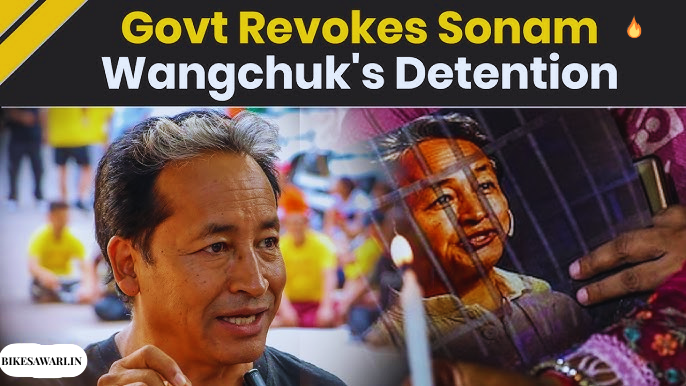
The speed at which quiet turned to shattered reality became clear in an instant. The objective may be a subject of debate, but the outcome is clear: damage was done, pain lingers. Each piece of information pushes fault lines of those hours a little harder. Some people had urged restraint, but damage was done nonetheless. Blame now permeates all corners in search of answers. That September day became a long wait within Jodhpur’s walls. Unexpectedly, he was stopped by authorities citing national security once they had weighed the damage. Initially, he had only been questioned; he was then moved as judicial holds tightened in a country ruled by judges for weeks.
A week short of half a year since he arrived, the authorities revisited Wangchuk’s case, and this time, he had been cleared of the charges related to national security. The news had filtered through to the prison authorities by midweek, and the paperwork had begun to move with a rush. Come Saturday morning, with the first light of the sun, the gates swung open as if they had a mind of their own, and there it was, freedom arriving without any fanfare.
Step outside, and suddenly, the shackles of imprisonment had fallen off. The shackles of the NSA’s surveillance had loosened. The paperwork that had been signed just a minute before had become the guide to his freedom. The gates swung open, and Wangchuk emerged to greet a sea of people that seemed to breathe a collective sigh of relief. Their faces shone with the morning sun, and their bodies hummed with electricity.
The night had been quiet, but suddenly, there were sounds. Hands clapped, voices rose, etc. Not loudly, but certainly, a chorus had been created. No words had to be said. Arms reached out, banners waved, and tears streamed down cheeks that had waited through the night, through the frost. It wasn’t a drama. It was truth. Wangchuk emerged slowly. Not with fear, but with a sense of gravity. He had come this far, and he had come with the help of this patient sea of people. No parade, no music, just the sound of footsteps on concrete. A welcome home that felt inevitable, rightful, his.
Sonam Wangchuk A wave of joy ran through his fans
The word spread fast, and it soon reached Ladakh, where those who knew Wangchuk’s work carried him in high esteem. When they got the update, they knew it to be an indication that persistence and determination could work, and that discussions on Ladakh’s concerns could move forward without conflict. They sent their wishes, and they cheered loudly.
The crowd outside the jail had already begun cheering, and their voices rose in joy as they spotted him. They moved forward, calling out like they had not seen him in ages. To them, Wangchuk walking free of chains was like turning a page that had been kept open for too long. To some, what they were seeing wasn’t release, just a slight turn in direction, spoken softly, and almost inaudibly. The ground beneath Ladakh seemed to be listening, more than ever.
Sonam Wangchuk Education and environmental work
Sonam Wangchuk is a name that rings a bell in India, not only because he has been gently prodding the education sector with new ideas, but also because he has been quietly changing the narrative about the environment in Ladakh.
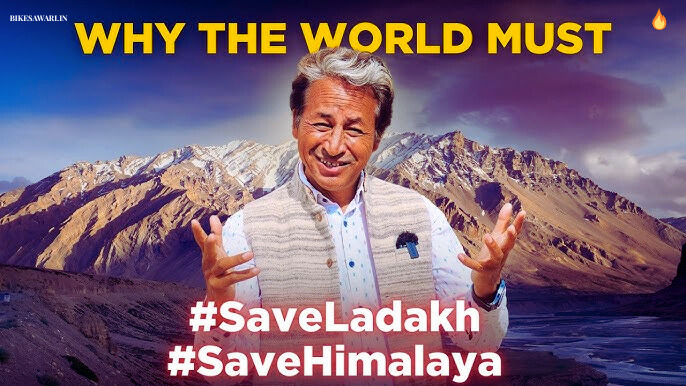
In the mountains, he shows up where there are few books to be found. It’s not long before people begin to notice what happens when learning happens after the road ends. The mountains don’t just change the landscape; they change the day, the decision, the entire experience. As the wind blows across Ladakh, his words fall softly to the earth, but fall they do. It’s what’s left beneath his feet that’s the real lesson, something far more profound than any book could ever hope to be.
Sonam Wangchuk The efforts to secure his release continued
Even weeks into his imprisonment, Wangchuk’s family and his supporters continued to advocate for his release. His wife then took up the cause, filing legal pleas one after another to contest his detention. Her actions were fueled by her resolve. The clamor for Wangchuk’s release remained vocal, generating new talks that prompted the authorities to dismiss the charges filed by the NSA.
What’s Next?
While his freedom marks a new chapter, it will not be an immediate switch. The focus remains on the Ladakhis’ rights to legal protection and a louder voice in local matters. The road ahead remains uncertain. Yet, Wangchuk’s supporters see a new way forward—a new way to talk, to avoid conflicts.
Freedom tastes sweet for Wangchuk’s supporters. After spending 170 days in detention, the writer-activist walks free without shackles. The change may be quiet, yet it marks a new chapter in the talks on the future of Ladakh and its mountains. Happiness may change, yet so does balance.
Also Read – War Escalates Further in the Middle East: Bombing of Kharg Island; 5 US Refueling Aircraft Destroyed
